Yves Tanguy was one of those guys whose lifespan is easy to calculate, born in 1900, dying in '55, at the age of 55. When I was young there were a lot of such figures, including my maternal grandfather, who were born around that time. It was always easy to know how old they were when they died. Now it takes better math skills to calculate lifespans.

I hadn't thought of Tanguy for some years, but his paintings were intriguing and important to me early on. Even when I was 7 years I gazed at this enigmatic painting, featured in a small art book:
The title, too, was strange:
"Mama, Papa is Wounded!" (1927)


This posting is actually inspired by reading an article by the art critic Herbert Reed, who interpreted this era while it was still avant guard. I especially like this photo of him gazing at a strange sculpture. "Biomorphic form" was big then; we were fascinated by archetypes and the world of Carl Jung and the surrealists. We invented and distilled forms, rather than merely copying and quoting images as we tend to do now, in this post-modern time.
 The visual world sure had a lot of bite in those days. The space in paintings looked infinite.
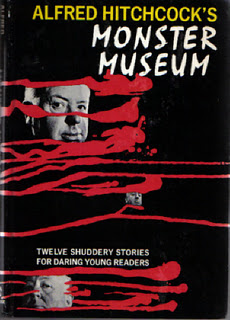
Alfred Hitchcock was a filmmaker who liked to use artists who mastered this infinite sense of space, as shown here, a backdrop by Salvador Dali. He used backdrops and hanging miniatures to great effect in his films. That they were painted made his films not less real, but more real. The impression was visceral. I have the feeling now, when I look at art or film, that space is not so much infinite, as it is finite: numerical.
 Many of the image-makers who come to the forefront now have some keenness as artists, but I have the increasingly common suspicion that they have gotten to their position not through their experience with the painter's palette, but more through their experience with number-crunching and codes.
For example: the current series Spartacus, despite its wish to impose a visceral feel (certainly enough guts splashed about!), leaves us with a removed, gray feeling. Space is digital, numerical. No longer are video games looking more like movies; movies are looking more like video games!